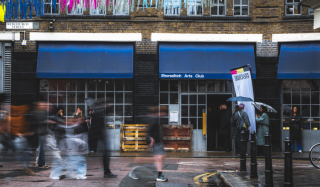
Last week, September 22-23, Wallonia brought its expertise in agricultural biosolutions to London for the World Agri-Tech Summit, showcasing a dynamic ecosystem working between agriculture, science and environmental innovation.
Biocontrol, biostimulants, green chemistry and biodiversity measurement, five Walloon companies presented solutions designed to support more resilient and sustainable agriculture. They were joined by two research centres, highlighting the breadth of expertise across Wallonia, from scientific research and technology development to commercial applications in the field.
With 44% of its territory devoted to agriculture, Wallonia offers a strong environment for developing and testing new agricultural solutions. Its strength also lies in the close proximity of innovative companies, universities, research centres and specialised expertise across life sciences, agriculture and food.
This ecosystem is developing at a time when agriculture must address several challenges simultaneously: maintaining yields, improving crop protection, preserving soils and biodiversity, and reducing dependence on certain conventional inputs. Biosolutions offer new ways of reconciling these priorities.
The term encompasses several families of solutions. Biocontrol uses naturally derived mechanisms or substances to protect crops against diseases, pests and weeds. Biostimulants focus more on enhancing plant growth and resilience, particularly in the face of climate-related stress. Biofertilisers, meanwhile, help improve crop nutrition and soil fertility.
A Momentum That Extends Beyond Wallonia
Wallonia is also playing a leading role at European level. Since June 2025, the Wagralim, the Agri-Food Innovation Cluster of Wallonia competitiveness cluster has been coordinating the European partnership “Biosolutions for Sustainable Agriculture”, which brings together ten innovation clusters from seven European Union countries.
The initiative aims to accelerate the development of biocontrol, biostimulants and biofertilisers by fostering collaboration between European regions. It also adopts a “One Health” approach, which considers the health of plants, animals, ecosystems and humans as interconnected.
image
Five Companies, Five Complementary Approaches
At the World Agri-Tech Summit in London, this diversity was represented by five Walloon companies.
APEO solutions, a spin-off from Gembloux Agro-Bio Tech, is turning ten years of research into essential oils into natural, patented bioherbicides. The company is developing alternatives to glyphosate and has expertise across the entire value chain, from identifying active substances to field trials and the regulatory procedures required to bring its products to market.
BiocSol, a spin-off from Université catholique de Louvain, focuses on tackling crop diseases. Its technology uses natural substances produced by beneficial microorganisms, without the microorganisms themselves being present in the final product. Its portfolio targets, among other diseases, potato late blight and early blight, as well as grapevine downy mildew, with the aim of providing effective, stable and residue-free crop protection.
With Fyteko, innovation centres on strengthening crop resilience to climate stress. The company develops patented, bio-based biomolecules that help plants cope more effectively with challenging conditions. Its technology has already undergone more than 800 trials under real-world conditions, and its solutions were applied across more than 500,000 hectares in 2024–2025.
MINAGRO - Maximize Your Impact operates at another level of the value chain. Specialising in green chemistry, the company develops bio-based co-formulants—including preservatives, adjuvants and solvents—particularly for manufacturers of agricultural products. Using renewable raw materials such as sugarcane bagasse and essential oils, it helps the industry improve its formulations while reducing their environmental footprint.
Finally, BEEODIVERSITY adds another dimension: measuring biodiversity and translating data into operational decisions. The company provides organisations with data on the state of biodiversity across their sites and territories, and then supports them in reducing risks and strengthening resilience. With more than ten years of experience, it monitors around 175,000 hectares annually across more than 30 countries.
From molecules to fields, and from crop protection to biodiversity, these five companies illustrate the breadth of expertise developed in Wallonia. In London, they share a common ambition: to build partnerships that make biosolutions not only an environmental response, but also a driver of performance and competitiveness for the agriculture of tomorrow.
Two Research Centres
They will also be joined by two research centres: Multitel and ULiège.
Founded in 1995 by the Faculty of Engineering of the UMONS, Multitel is a research and innovation centre that supports companies in the design and integration of advanced technologies. Its multidisciplinary team of around 100 experts has developed expertise in the Internet of Things (IoT) and embedded systems, networks and cybersecurity, applied photonics, artificial intelligence, and railway certification. Multitel fosters innovation through feasibility studies, prototype development, technology transfer and training, while actively contributing to research and development projects at both regional and European levels.
University of Liège is a public university with a global outlook, built around three core pillars: education, research and service to society. Across four campuses and 11 faculties, it brings together a multicultural community of 29,438 students and doctoral researchers, supported by 5,988 staff members. The university offers 243 master’s programmes as well as an extensive range of continuing education opportunities, developed in close collaboration with numerous partners. With significant research capabilities and an annual budget of approximately €571 million, ULiège advances knowledge and innovation with a strong focus on delivering meaningful impact."
Linked articles
Related articles
SAVVY Interior Design: Where Circularity Meets Belgian Craftsmanship
From Waste to Resource: How Belgian Company Composil Is Reinventing Carpet Recycling in Europ

Why Wallonia is establishing itself as Europe’s strategic and innovative defence ecosystem