Did you know that just across the Channel, Wallonia, southern Belgium, is home to two National Parks, including the stunning Semois Valley National Park? Created to explore, protect and reconnect, this vast natural landscape is far closer than you might think.
Often, to escape, we take the road to the South, busy motorways, and far-away destinations. But adventure doesn’t always begin at the end of the road. Sometimes, it’s waiting quietly nearby, at the crossroads of secret trails and mysterious forests, where rivers carve their way through ancient hills.
All it takes is a change of direction: take an unfamiliar road, away from highways and, perhaps your GPS, or follow the sound of flowing water to rediscover the excitement of travel. Here, travel is in its simplest, most rewarding form: slow, local, and deeply immersive, where each hill tells a story. Welcome to the Ardennes, a green haven of authentic escapes, perfect for travellers seeking beauty, calm, and a sense of discovery.
Biodiversity and natural heritage
Until 2022, Belgium had one National Park, the Nationaal Park Hoge Kempen in Flanders, created in 2006. The Post-Covid Recovery Plan has, however, made it possible for the southern part of the country to introduce two new parks: the Parc national de l'Entre-Sambre-et-Meuse and the Parc national de la Vallée de la Semois, with the priority objectives of stimulating the economic, social and sustainable development of the region and the preservation of its biodiversity and exceptional natural heritage. These parks have allowed Wallonia to position itself as a major sustainable tourist destination, with several innovative elements.
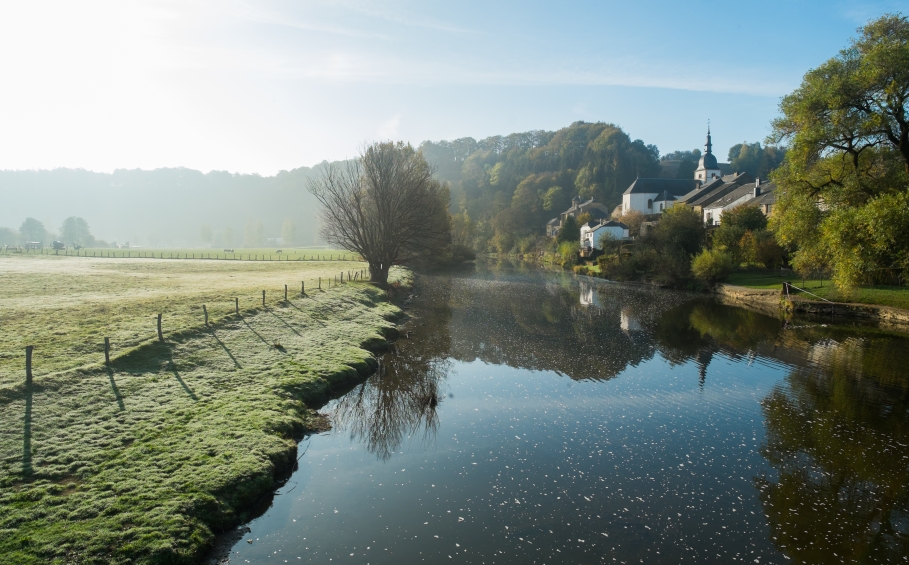
WBT - Vallée de la Semois - Chassepierre
In terms of nature and tourism, these two territories are working in harmony, with two ambitious projects, a cross-cultural dynamic, and coordinated approach. A collaborative and participatory process was put in place for their development. Both between all concerned actors, but also between the Walloon Tourism and Nature administrations.
The projects are built to take into account the well-being of each of the territory's "users", aiming for the harmonious cohabitation between tourists, inhabitants and local actors. They paid particular attention to social inclusion, developping projects within the National Parks to foster the reception of vulnerable people and those with specific needs.
A question of points of view
Located in the heart of the Southern Ardennes and Gaume Nature Parks, the Semois Valley National Park covers 28,903 hectares, spreading over eight municipalities: Bertrix, Bouillon, Chiny, Florenville, Herbeumont, Paliseul, Tintigny and Vresse-sur-Semois.
Between deep forests, winding rivers and breathtaking views, this territory is home to remarkable flora and fauna. The expression "breathtaking", in this case, is to be taken literally if you wish to have a fun hike through the steep-sided valleys, not easily tamed.
If you just want to admire the panorama, the different sites will appear in all their majestic beauty. It's a question of points of view - obviously - but the Tombeau du Géant, in Botassart, one of the most photographed sites in Belgium, is certainly worth the visit. He is really magnetically beautiful, almost enigmatic. Legend says this is the resting place of a Gaulish warrior, a giant-sized hero from the Treviran tribe who chose to jump from the Rocher des Gattes rather than be captured to fight in Roman arenas.
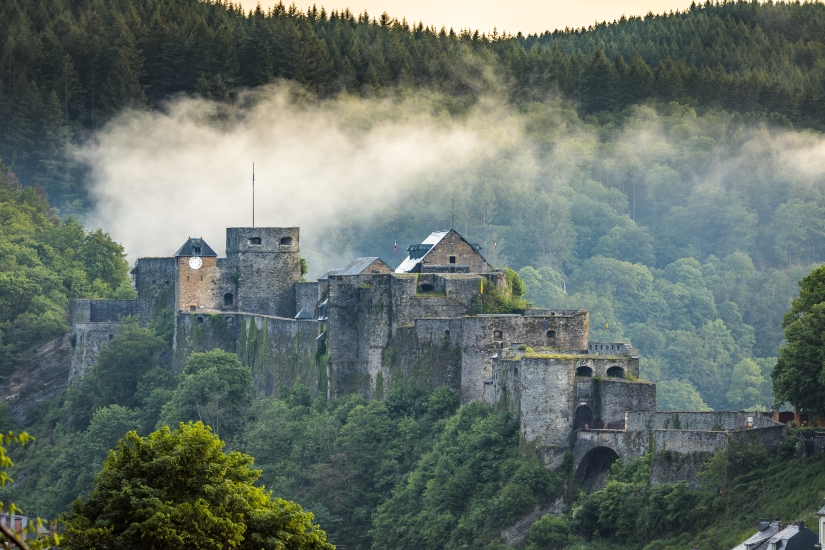
Daniel Elke - Château de Bouillon
In Bouillon, access to the medieval castle of Godefroid can also be preceded by a small gourmet stop, or by boarding, not a kayak as in Vresse, but pedal boats shaped like leisurely swans that transform the Semois river into a tourist moat for the castle to overlook.
Less than two hours from Brussels or Liège, if you don't wish to travel by car in the summer, you can also take the Evasion du Tec line, which takes you to the Semois Valley, or use the train access to different spots across the Park.
Ambitious and sustainable project
It is true that the richness of the landscape, historical heritage, traditions, folklore and legends of the Semois Valley contribute to forging a strong identity with a unique character. This territory is above all characterized by its great biodiversity, thanks to the variety of exceptional environments found here (old and slope forests, wild rivers, wetlands, etc.).
VISITWallonia reminds us that this National Park is home to characteristic species such as the beaver or the otter, while inviting you to escape through legends, heritage and nature adventures.
"As part of an ambitious project for the sustainable management and enhancement of its natural and cultural riches, the Semois National Park is the result of close collaboration between municipalities, local actors and nature enthusiasts,"
says the site Ardenne Méridionale, whose name is quite a program. It promises visitors, whether they are lovers of hiking, discovery or simply looking for rejuvenation, an unforgettable immersion in one of the most beautiful valleys in Europe.
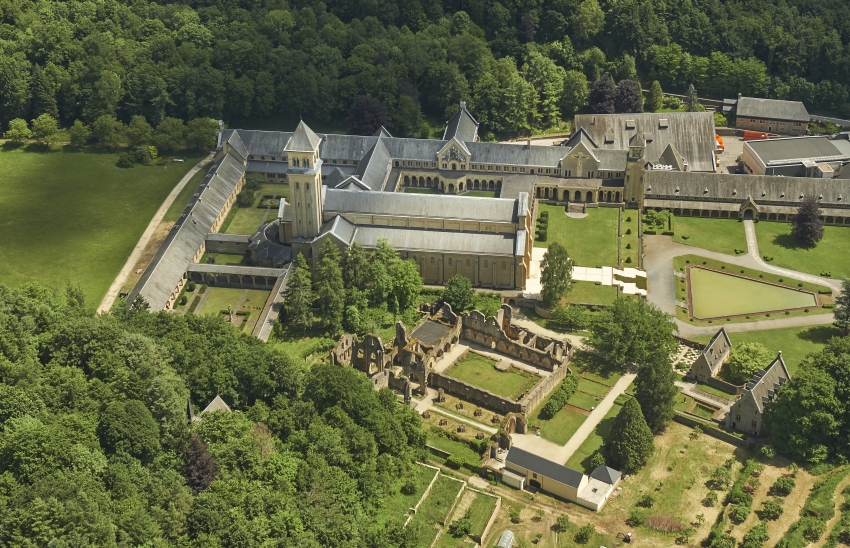
WBT - Olivier Polet - L'abbaye d'Orval
The "Tobacco Route"
The Solanaceae family, which you might know from their tomatoes and potatoes, were also involved in tobacco production. On a very well illustrated sign in Botassart, we can read that the natives in South America did not mind its dangers. Nor did the farmers of Semois who, from the 16th century, found it perfectly adaptable to the fertile land of the river, well protected by the deep valleys and nourished by a schistose soil devoid of acid and limestone. Initially a medicinal plant, tobacco was quickly chewed and smoked, which considerably increased its value. But in the 18th century, a royal member limited production to personal consumption.
Shortly afterwards, a teacher, Joseph Pierret, reintroduced tobacco in Alle. His experimental plantings exceeded the most optimistic predictions, both for its yield and quality, which was considered superior.
The proximity to the French border gave ideas to a lot of smugglers. Indeed, in France, tobacco cultivation was a state monopoly. Through ever-changing forest paths, the tobacco, on the Belgian side, arrived in "huts" ideally located on the two borders. During the two world wars, tobacco smuggling was practiced intensively, but mostly for subsistence reasons, so honor was maintained...
Starting from Alle-sur-Semois, the"Tobacco Route" includes two marked routes to follow by car in the communes of Bouillon and Vresse-sur-Semois.
A complete guide is available in the Tourist Offices. Good road. But go with caution...
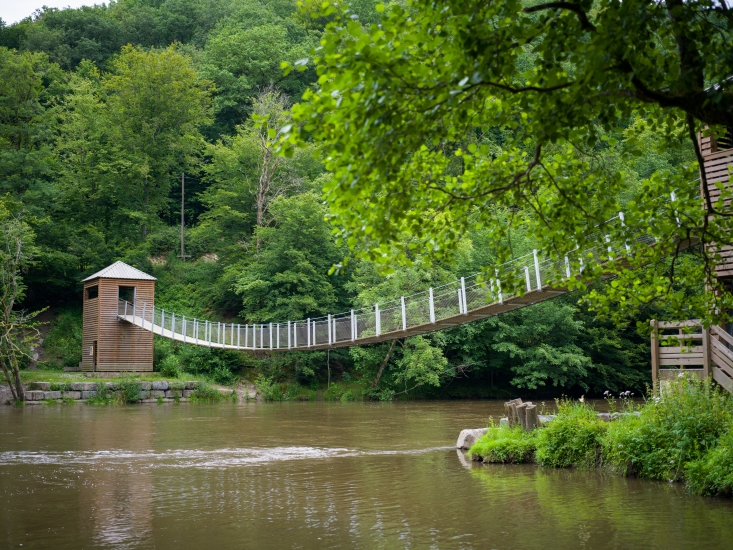
WBT - Maxime Collin - Passerelle de l'épine à Bouillon
VISITWallonia's tips
The must-sees
-
The medieval castles of Bouillon and Herbeumont.
-
The dozens of exceptional viewpoints along the Semois (including the recently inaugurated Jambon viewpoint: a belvedere offering a breathtaking view of the Semois, which forms a two-kilometre loop resembling a ham, a local delicacy).
-
The Passerelle de l'Epine (near Bouillon) - inaugurated in 2020, the Moulin de l'Epine footbridge is a 55-meter-long suspension bridge that has become a flagship attraction just a stone's throw from the city of Bouillon. It is located on the route of many walks, linking in particular those of Bouillon and Botassart. There is no doubt that the installation's photogenic side will encourage you to immortalize yourself on this particularly spectacular crossing of the Semois!
-
The mythical GR 16 which follows the course of the Semois.
-
Several "Most Beautiful Villages of Wallonia": Laforêt, Chassepierre, Gros-Fays, Our.
-
The trail station of Herbeumont and the mountain bike resort of Vresse.
-
The old slate quarries of Bertrix and Alle-sur-Semois.
-
The Tobacco Route, which takes you to discover the remains of this once very popular culture in the valley.
-
Beautiful canoe escape: a day trip in a real Canadian canoe, led by a River Guide. After a technical introduction to steering and handling of the two-seater canoe, everyone paddles on a course of about ten km, over the day and conbined with activities.
-
The Abbey of Orval, a stone's throw from Florenville.
NB: Entrance gates are being developed in each of the eight municipalities of the territory. While waiting for them to open, tourist reception is provided by tourist offices.
This article was written by Philippe Vandenbergh for W+B Review n°169.
Linked articles
Related articles

Belgian Performing Arts at the Fringe 2026

Denis Sungho: The Belgian-Korean Guitarist Connecting Europe and Asia Through Music

Collectible Brussels 2026: How Belgium is Redefining the Global Landscape of Collectible Design