Born in South Korea and raised in Wallonia, acclaimed classical guitarist Denis Sungho has built an international career spanning Europe's greatest concert halls and Asia's thriving cultural scene.
As Belgium and South Korea celebrate 125 years of diplomatic relations, his story is one of artistic excellence, cultural identity and the power of music to connect continents.
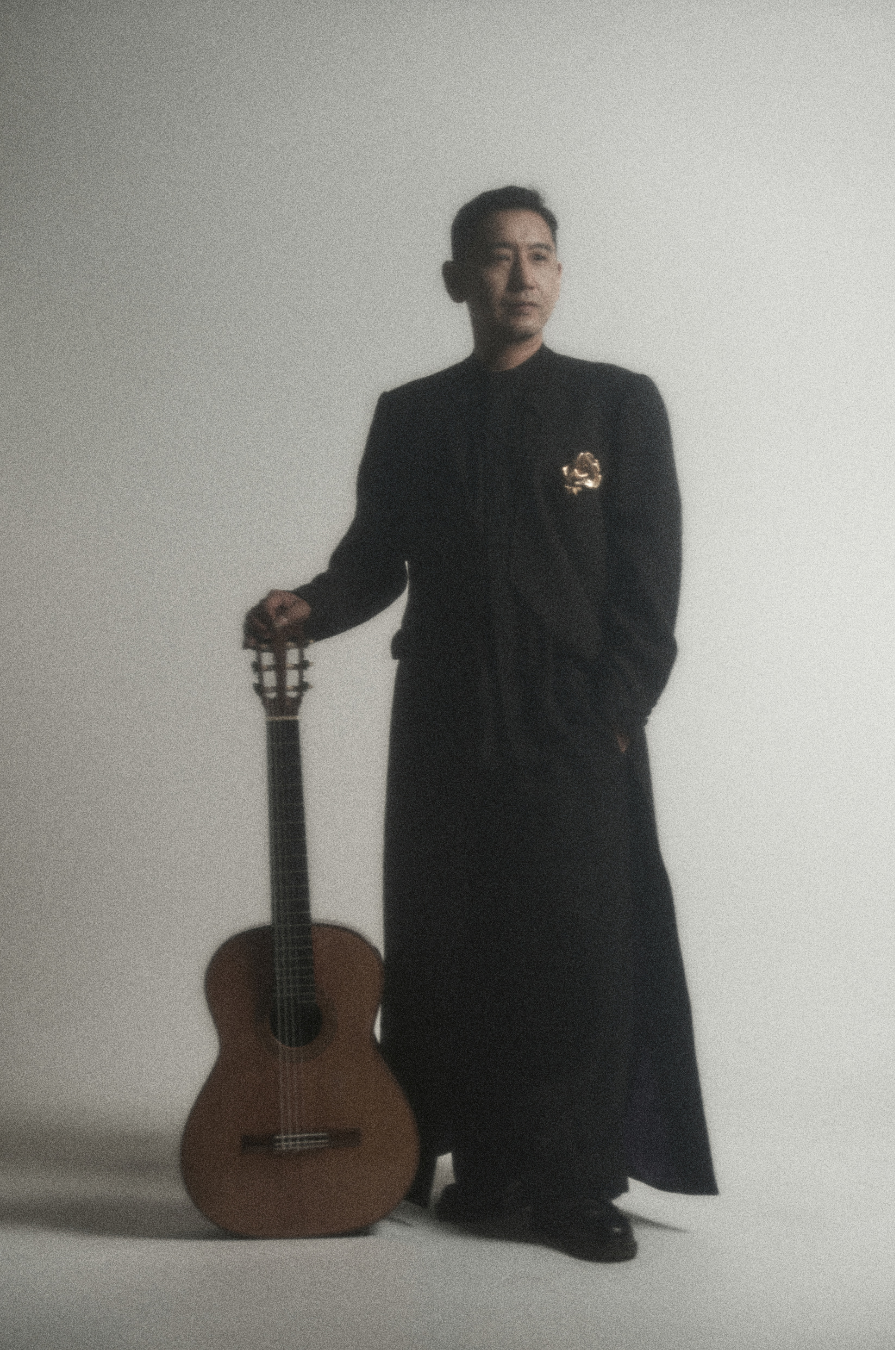
(c) Studio Off-Beat
A life shaped by two cultures
It is six o'clock in Seoul, eight hours ahead of Brussels, when the video call begins. Denis Sungho is finishing a day of meetings, because this classical guitarist is also a true entrepreneur. Advisor for various prestigious brands, manager, and show producer, he also manages a foundation that allows him to spread his art. "To be a modern musician is to synthesise who you are, what you have absorbed and what you want to share," begins Denis Sungho.
Born in Busan, South Korea, in 1975, he arrived in his Belgian family that same year and had a peaceful childhood where music quickly took its place. Then followed an almost obligatory course: conservatory of Huy, then of Brussels with a First Prize in 1994, as well as additional training at the Ecole Normale Supérieure Alfred Cortot of Paris and then at the Conservatoire de Mons where he obtained his Higher Diploma in 1998.
From Wallonia to the world's greatest concert halls
Work has always been his line of conduct, but his status as a "Rising Star" gave him access to the greatest stages.
The European Concert Hall Organisation (ECHO)’s initiative, which highlights each year exceptional young musicians selected for a European tour, also opened up the world to him: the Carnegie Hall in New York, the Concertgebouw in Amsterdam, the Musikverein in Vienna, the Mozarteum in Salzburg, the Symphony Hall in Birmingham, the Konserthuset in Stockholm, the Megaron of Athens, the Palais des Beaux-Arts in Brussels, the Cité de la Musique in Paris, the Philharmonie in Cologne, then in Berlin, to name but a few.
«I will be eternally grateful to Bozar and the jury for this wonderful opportunity. It was a great opportunity. It’s an unforgettable experience that laid the foundation for a career. Without this prize, I wouldn’t be where I am. There I also learned the experience of the soloist’s solitude: traveling, playing, eating, facing the pressure always alone."

(c) Studio Off-Beat
Reinventing a career in South Korea
Fifteen years ago, Denis Sungho flew to South Korea, driven by a new wind. His repertoire was expanding, his partners diversifying, and his musical universe enriched by musical experiences. He was building a career that embraced his emotional requirements. In South Korea, where his albums are now at the top of sales charts, he was also the first classical musician to collaborate with a pop diva, Insooni.
«Guitarist, it’s a special profession. It’s a niche within the niche. I’ve never felt comfortable in the shackles, maybe it’s due to my personal story. I hate being locked up. I deeply love classical music, I wanted to be a pianist and play the great romantic concertos, even if I happen to be a guitarist. This forced me to listen to other styles of music, not just classical. I am always looking for emotion and sound. Musical honesty is important. Generosity too. Always offer the best of yourself."
An admirer of artists as varied as Daft Punk, The Weeknd, London Grammar, H.E.R, Childish Gambino, electronic music to R&B through Pierre Rapsat (the artist of his youth), Denis Sungho never lets himself be locked into one style. «Just as I love Belgian, French, Korean, or Chinese cuisine. I need musical diversity and new excitement. I am happy to have gone to Korea, but Wallonia taught me to nourish my curiosity, to seek beauty in simplicity. I don’t want to embody anything; I want to create links.”
Building success in one of the world's most competitive music markets
And to be "Big in Japan" as the expression goes, even and especially in Korea, you must work and hang out ten times more than at home, says Denis Sungho, "When I arrived in Korea, I didn’t know anyone. I worked a lot, took risks, made mistakes. One might think that with such a vast and bustling territory, opportunities are more numerous in Korea, but the general level is very, very high. See the level of Koreans in competitions. Even amateurs are excellent. So, you have to carve your own place. And being surrounded by so many excellent musicians pushes you to surpass yourself.
Not only in music but also in the originality of the programmes or the more specific projects. Also, since everything is private, you have to deal with being profitable for a promoter or an agent. I also had to smartly create a network. In Korea, being a producer also means raising funds and taking responsibility for both losses and profits. I went through very difficult times to be here today. I almost gave up, but I stuck with it. This is also Asia, it’s very competitive. Having a double identity makes you think, it opens your mind. I will never be either Belgian or Korean. I had to and I still have to be creative and strong. Honest too, professionally and financially, otherwise we don’t last here."
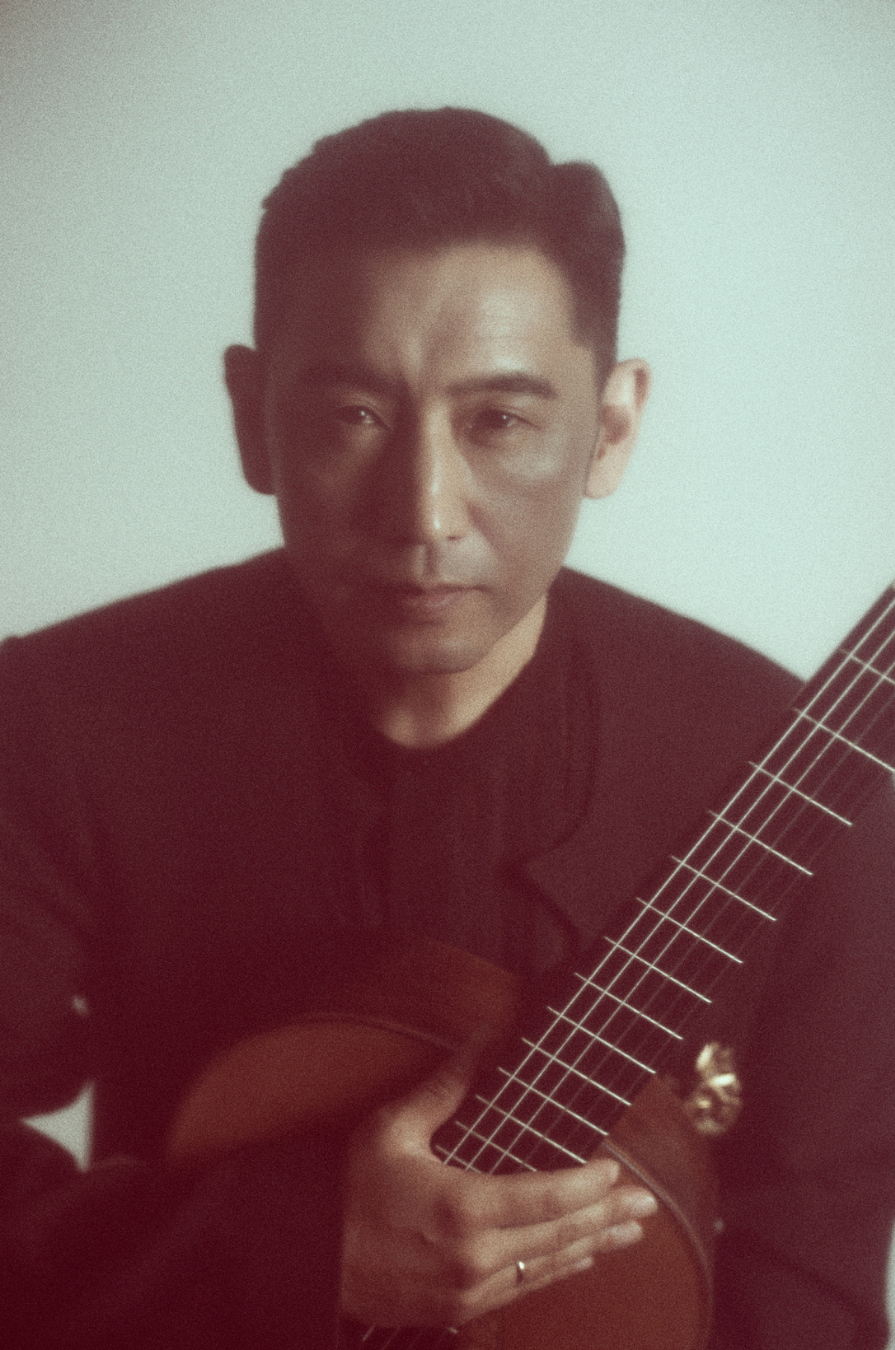
(c) Studio Off-Beat
Why Europe should continue investing in culture
Denis Sungho is almost embarrassed to say it, but for him, Asia is now the centre of the economic and artistic world. “This is not pleasant to acknowledge for a European, but it is a fact,” he admits. And not just Korea, China, and Japan, but also all Southeast Asia and Mongolia, which is 60% of the world’s population. When all of Asia reaches the same level as Korea and Japan, it will open a huge market, he admits: "In general, Asians bet on education and excellence: I have many friends who come out of Julliard or Harvard, it creates healthy competition. It’s not easy but it’s very enriching. I’m not saying that everything is fine here, but there is a tremendous creative and musical ferment. I am very attached to Europe and Belgium; my heart is in it. And I am sad to see how regional the policies are, the short-term visions. There are so many beautiful things in Europe; dance, opera, music, cinema. Europe absolutely must support creation, rely on its culture and history, and export it. It is its only natural resource."
The future of classical music
For Denis Sungho, classical music has a great future, soloists dare and explore more, just as pop groups or singers increasingly invite classical music in their compositions, like Rosalia, the star of Catalan pop, "or Vivaldi recomposed by Max Richter", continues Denis Sungho, "the albums of Daniel Hope, Alice Sara Ott with Olafur Arnalds, Nils Frahm with his classic and electronic mixes, Lang Lang also, it’s very exciting. Deutsche Grammophon is also daring and has done a lot of good for classical music. Since the world is anxiety-inducing, it seems to me that refinement and a certain idea of beauty are a beautiful refuge. I’m not at all pessimistic. Classical music may be changing its face, but that’s a good thing: it’s alive and in great shape. His survival is no longer in dispute."
For his part, if Denis Sungho has no regrets, but he still dreams of future collaborations, especially in musical composition for cinema. Even when you think you've played all the songs of your life, there's always more to explore and surprise you. Here or elsewhere, the vastness and expansiveness of the world remain a discovery.
By Catherine Haxhe for W+B 171 by Wallonia-Brussels International
All photos (c) Studio Off-Beat
Linked articles
Related articles
Galerie Augusta: Championing Sustainable and Circular Design in Brussels
Belgian Performing Arts at the Fringe 2026
Collectible Brussels 2026: How Belgium is Redefining the Global Landscape of Collectible Design