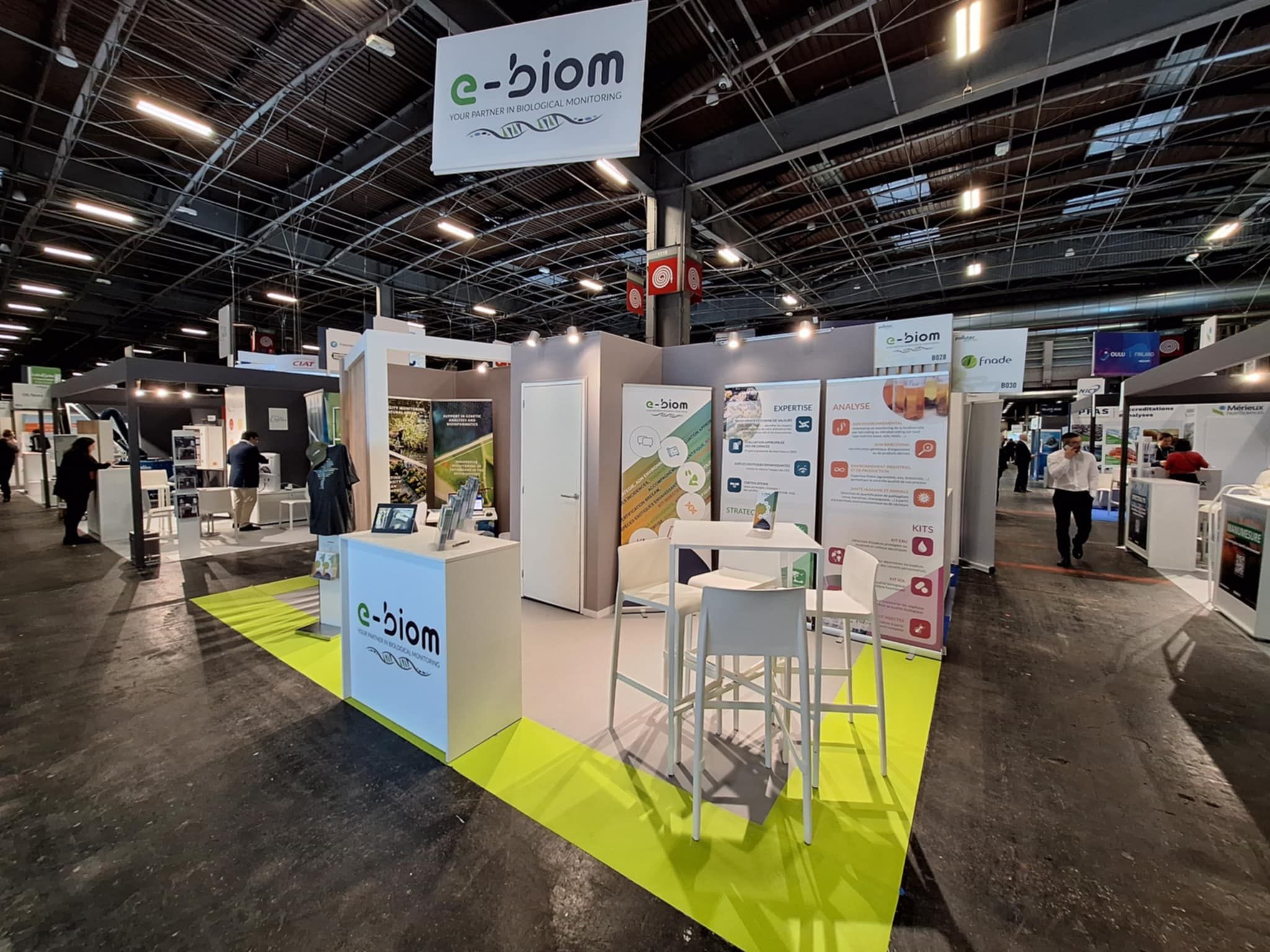
At Pollutec 2025 in Lyon (France), Wallonia firmly asserted its role as a driving force in environmental and ecological innovation. A magnet for companies driving environmental and ecological innovation, the event brough together a packed audience across the international ecosystems.
Thanks to the support of the Wallonia Export & Investment Agency (AWEX), and its Lyon office, as well as the assistance of Wallonia-Brussels International, the Walloon Cluster H2O and the GreenWin cluster, more than 60 Walloon stakeholders traveled to highlight their innovative solutions in the field of water and circular economy. Among these Walloon actors, two spin-offs from the Université de Namur stood out: E-BIOM and TRAQUA. Their distinguishing feature? They both originated from the same institute, the Institute of Life, Earth and Environment - ILEE at UNamur!
While Traqua focuses on hydrogeology, E-Biom has developed its expertise in the field of environmental biodiversity.
"We are here to show that biodiversity can be measured, monitored, and even valued in the same way as carbon," explains Jonathan Marescaux, biologist and co-founder of E-Biom. "And this, thanks to robust methods, derived from genetics."
Technology born in a university, now mature
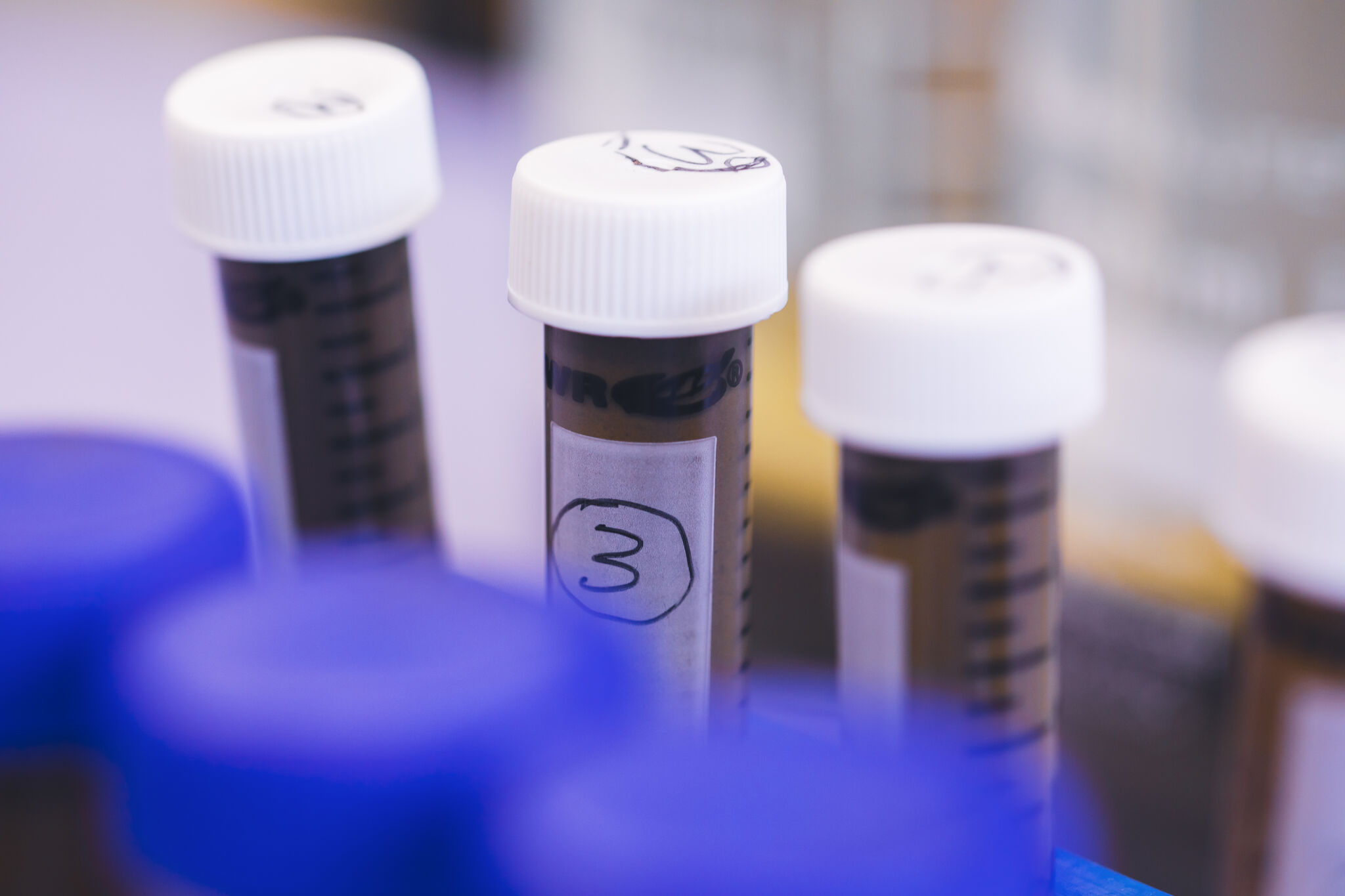
It was in 2019, after three years of research within the Walloon Region's First Spin-Off programme, that the company was officially launched. The idea is innovative: instead of observing or capturing species to measure the biodiversity of a site, E-Biom proposes to extract the DNA left in the environment such as in samples of water, soil, air, or even honey, to assess their richness.
"It’s a bit like what forensic science does, except that we don’t look for human traces, but those left by fish, amphibians, bacteria or plants," explains Dr. Marescaux.
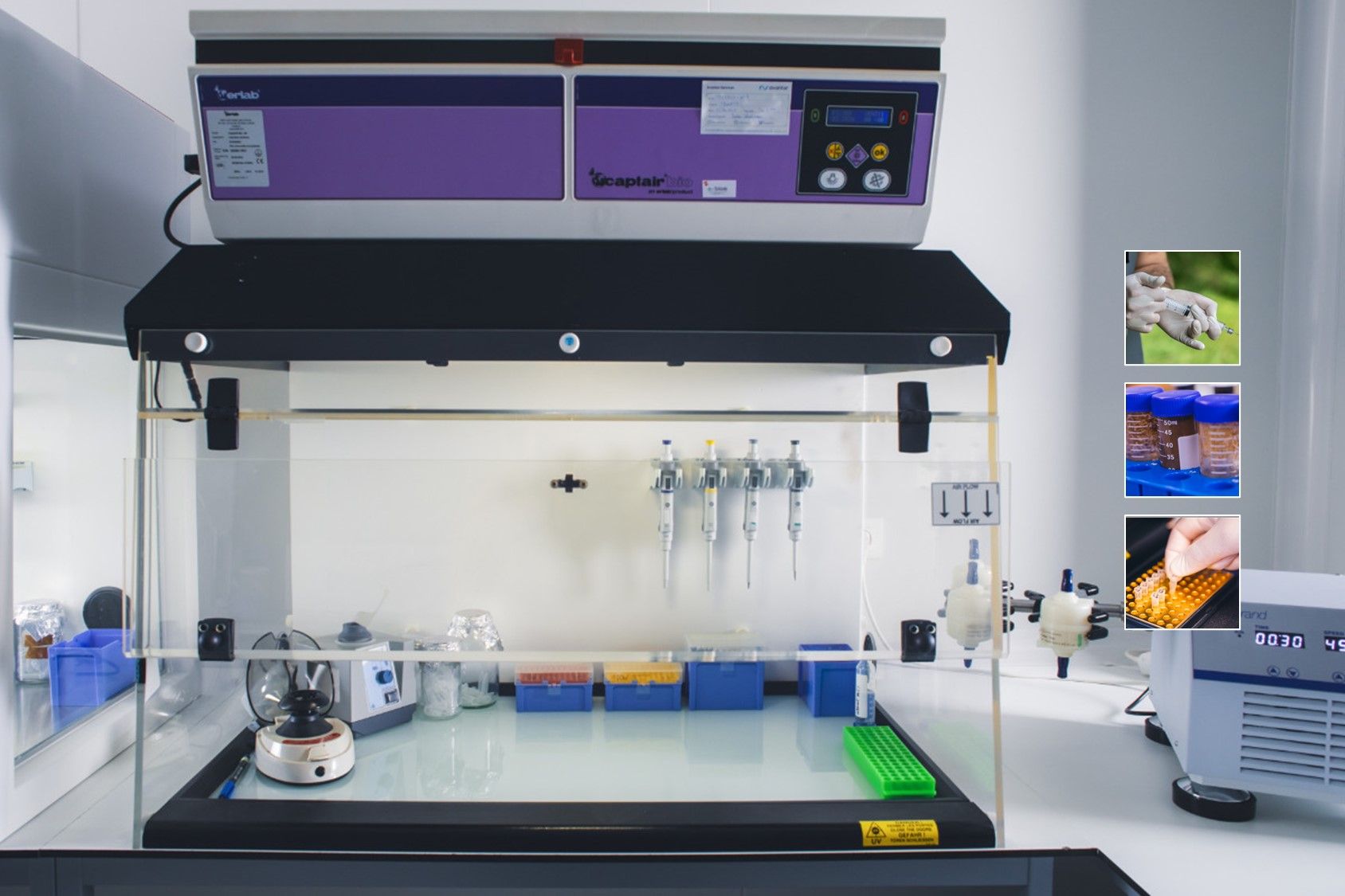
Located in the Parc Scientifique Crealys (near Namur), the company now has 240 m2 of laboratories entirely dedicated to environmental genetics. This is where all its analyses are carried out.
The company focuses on three main areas: biodiversity monitoring, pathogen detection in the environment (using a "One Health" approach), and industrial environmental control. In the latter case, it is for example to quickly detect the presence of undesirable bacteria or pathogens during food preparation. This is particularly relevant to the brewery and agri-food sectors.
The pandemic: a challenge for the young company
E-Biom’s beginnings were marked by the Covid pandemic. An event that paralyzed the economy. For the young company, however, it was an opportunity to diversify. Approached by the public water management company, they were asked if they could detect traces of the coronavirus in wastewater. After all, they already knew how to find frog DNA in a pond... The challenge was met brilliantly. This scientific recognition then allowed them to accelerate their growth.
“It was a decisive moment for the credibility of our technology. We proved that our analyses were reliable, reproducible and useful for public decision-making," comments Jonathan Marescaux.
Objectifying ecological decisions
DNA is just a starting point. E-Biom’s ambition is broader: to provide concrete tools and indicators to help businesses and public authorities make environmentally-informed decisions.
“We need to get clearer. Saying we’re going to plant a hedge for biodiversity is all well and good. But is it really useful? Is it measurable?," questions Jonathan Marescaux. "Our role is to objectify these choices through scientific analyses."
The company thus positions itself as a strategic partner, capable of transforming ecological ambitions into precise and quantifiable action plans, whether in real estate, industrial or territorial projects.
A duo at the head of growth
At the management level, two complementary profiles share the roles. Jonathan Marescaux, coming from the academic world, brings the scientific vision. Véronique Pire leads the company's structuring and commercial development.
"I was the first non-scientist on the team," she explains. "My goal is to bring a corporate vision, structure our offer, and expand our presence internationally."
Today, E-Biom employs around ten people and relies on a model of freelance ambassadors in France, Flanders and the Netherlands to develop.
In just a few years, France has become E-Biom's leading foreign market, representing nearly 50% of its revenue. The company collaborates with large groups such as EDF, CHANEL, Veolia and even environmental consulting firms.
But the growth goes beyond European borders. Missions are underway in French Guiana, monitoring tropical rivers, as well as in Guinea and Cameroon.
The spin-off's technology and consulting expertise are attracting even more attention. Discussions are underway in Brazil. South Africa is also on the agenda where large-scale projects require a high level of environmental expertise. The same is true for the Middle East, where major urban projects are increasingly integrating environmental considerations.
“These are markets where the environmental component is becoming unavoidable. We want to be present, but this requires a real strategy and local partners," says Véronique Pire.
The support of AWEX is mobilized to support this growth. The company remains closely linked to Walloon environmental clusters (Greenwin and H2O, also present at Pollutec) and intends to continue leveraging regional mechanisms to accelerate its expansion.
Building the territory of tomorrow in Chênée
In Wallonia, its expertise is also attracting attention. In Chênée, for example, E-Biom is participating, on behalf of an architectural firm, in the development of a project aimed at "renaturing" a section of the Vesdre valley, heavily affected by the 2021 floods. The aim is to transform an industrial wasteland into a floodable park and a wetland, with the creation of a footbridge, a mobile hub and various other facilities.
An approach that combines ecology and development
With a rigorous scientific method, an agile business model and an international strategy, E-Biom has established itself as a key player in the ecological transition. Contrary to ideological discourse, the company advocates for an objective, measurable approach to ecology that is compatible with economic imperatives.
"Our goal is to make our clients' projects better, more respectful of biodiversity, and to allow companies to do better, not less," concludes Jonathan Marescaux.
This article is written by Christian Du Brulle for the DailyScience.be platform.
First Published on Wallonia.be
Images: E-BIOM
Linked articles
Related articles
From Waste to Resource: How Belgian Company Composil Is Reinventing Carpet Recycling in Europ
Why Wallonia is establishing itself as Europe’s strategic and innovative defence ecosystem
Belgium House Returns to London: Innovation Takes Over and Cross-Border Collaboration Takes Centre Stage